
Mahanth S. Joishy is Editor of usindiamonitor
The plot thickens!
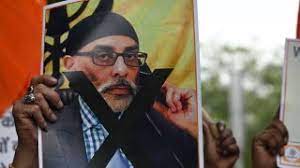
In recent times we discovered the sordid details behind the assassination of a Canadian citizen of Indian origin, Hardeep Singh Nijjar, on Canadian soil. In the aftermath of this stunning event, the Canadian government led by Prime Minister Trudeau himself accused the government of India of being directly involved without presenting all the evidence (some of which it turns out was probably supplied by US signals intelligence). In a very public manner. The guy that was offed in Canada was a known leader of Khalistan separatism, the multi-decade movement for an independent Sikh state that often turns to violence, and is considered by the government of India as seditious. The movement even claimed the life of former Prime Minister Indira Gandhi when two deep, deep mole Sikh bodyguards gunned her down with their service weapons, an epic failure that still haunts the Indian national security establishment 40 years later.
This story has many layers to it, and culpability isn’t the biggest story within the story here. The Canadian plot of Summer 2023 set off an escalating bilateral diplomatic row that caused severe damage to the Canada-India relationship that is ongoing, including painful setbacks in diplomatic and consular interchange that have become disproportionate to the original sins committed by both sides. Things quickly got out of hand. India for its part has denied having a hand in that murder and responded forcefully. But few expert observers on either side will deny the Indian government should be considered a usual suspect, especially when considering who has the motive and the means.
Then another bombshell dropped closer to home in recent weeks for those living Stateside when we found out that another Khalistani separatist in New York named Gurpatwant Singh Pannun was also targeted for assassination around the same time, with facts pointing to the conspiracy originating in India yet again. While there are parallels there are also key differences. The United States government, unlike the Canadian government, managed to preemptively foil the brazen play to assassinate this Indian-American citizen in New York in Summer 2023 thanks to effective surveillance and the efforts of an undercover DEA agent. It’s all chronicled in a highly fascinating United States DOJ indictment that reads like it’s straight out of a thrilling spy novel. The detailed indictment names an Indian government intelligence official code named CC-1, a “senior field officer” who was allegedly the puppet master behind the indicted Nikhil Gupta, an India national who was coordinating unwittingly with the undercover DEA agent to plan the assassination. As if to add to the spy novel intrigue, Gupta was taken into custody in Prague no doubt to his shock, in order to be extradited to the United States to await trial. We should be reminded at this juncture that an indictment does not prove the allegations within it, and this character Gupta is innocent until proven guilty, but DOJ indictments historically result in convictions a majority of the time.
The very good news here is that unlike the Trudeau administration, the Biden camp did not lash out publicly against the Indian government with guns blazing, using admonishing speeches and a steady drip of leaks to the press to launch a spiral of escalation and passionate rhetoric this time. India in turn was not compelled by the Americans to become defensive or respond aggressively, and the situation has largely stayed out of the public eye over the last few weeks, which I found pleasantly surprising. That’s not to say the two sides aren’t engaging over the matter. Meetings have been held behind closed doors by senior intelligence officials in New Delhi and Washington to hash it out. The US government has handled the matter relatively quietly and let the indictment speak for itself after methodically gathering evidence over time. The alleged crimes will be adjudicated in court rather than the dirty laundry being loudly aired out for political points. And I believe this is all for the best.
I am not trying to downplay the serious nature of an assassination plot against a US citizen by foreign actors on US soil, however unsympathetic a character this person may or may not be. This does need to be addressed but there are good ways and bad ways to go about it. Whether the Indian government at some middle or higher level was involved is not the point. Governments including America’s send people out to foreign lands to conduct business of a clandestine variety every day, some of it unsavory, some of it violent in nature. If there was official wrongdoing, it deserves to play out in court through a prosecution to be conducted by the Southern District of New York, and relevant facts will come out that may prove embarrassing to those involved. But this plot should not derail bilateral relations between friends, which is the ugly place where the Canadians and Indians now find themselves- in a bind that becomes hard to walk back from- or to that dark place where US-India relations descended for far too long during the Devyani Khobragade disaster, which by uncanny coincidence or pointed signal from the universe also prominently featured the very same Southern District of New York. That fiasco made me want to bang my head against the wall.
This could have gone much worse. It is in one way fortunate that through Indian incompetence, American vigilance, or some combination thereof no blood was shed in the Big Apple, and this bought both sides some breathing room, and space for calmer heads to prevail. For this great game isn’t about winners and losers, but establishing boundaries and parameters in a world with enough other international problems already. Perhaps the United States and India have wisely learned their lessons from the Khobragade and Nijjar disasters? I would hope US officials will deal with India quietly and respectfully, fairly yet firmly as needed to map out a way forward in these sensitive matters, for this will surely not be the last hairy situation in the bilateral sphere as India finds its role on the world stage growing and figures out what that looks like, and America adjusts to it. And that India, regardless of its final guilt or innocence, responds in kind. What we need most is to move on from this with the friendship intact. There are bigger fish to fry along the road to a robust US-India alliance the two countries and the world need.
 MAHANTH.ORG: ANCIENTIC FUTURIST
[…] RAW has been growing in stature recently on the global stage and there are increasingly loud murmurs about how active the agency may or may not have been even inside friendly confines such as the United States and Canada, as I’ve chronicled in depth. […]
LikeLike