
Mahanth S. Joishy is Editor of usindiamonitor
Are We the Romans just before the big fall?
Rome wasn’t built in a day, and it didn’t collapse in just one day either. Similarly, America’s unique brand of decline approaching terminal velocity isn’t an overnight phenomenon. Maybe we aren’t Roman, but there is something very, very wrong with us Americans. The horror movie plot is unfolding slowly, and the long arc of national dissolution makes it hard for most to see in real time. In November 2021 I placed the odds that the United States as we know it would survive at 50% upon soberly taking stock of the landscape at that moment. I believe the odds of the survival of the grand American experiment since then have crept even lower, to less than 50/50 today. Unstoppable forces both domestic and international now present existential threats to America’s future that will only continue to grow. Nuclear holocaust, climate change, unleashed AI, cyberwar, financial collapse, or biohazard either manmade or natural in origin… Any one of these threats in itself represents such great potential catastrophe, it’s hard to even fathom. And that’s not even the worst news.
In isolation none of these risk prospects manifesting would represent the worst case scenario, horrifying as a nuclear armageddon in particular promises to be. What if this decade America were to get dragged into another great power war which incorporates more than one or all of these separate national security threats rolled into one singular simultaneous shellacking of biblical proportions? The chances are very low, but still above zero. If that comes to pass, the harm to life would be measured in unimaginable proportions, dwarfing in scale the wreckage of previous World Wars. A US-China war with allies jumping into the fray is the most likely potential scenario. No side will truly win the next great war, thanks to a proliferation of new technologies that will severely cripple all participants. This is not intended to be alarmist or exaggeration; rather, we must take honest stock of the road ahead including the weapons of violence we may encounter at levels exponentially more destructive than anything humans have ever deployed before.
Americans remain alarmingly overconfident and under-informed about our place in the world, a wicked brew perfectly blended for a spectacular downfall during the 2020s without a dramatic change in course.
While the risk of the nation’s collapse during our time keeps growing, this undesirable outcome is far from inevitable. It is not too late. Americans still have a fighting chance if they manage to get their act together, just as their predecessors did at other disruptive existential junctures in US history upon receiving the solemn call. In fact we even have a golden opportunity to apply a poignant lesson from the very beginning of the whole project, from America’s origin story itself, to overcome the most intractable national security conundrums confronting us. The foremost challenge to America by far is not the external threats, but the vicious level of internal political division tearing us apart that makes us a ripe target for attack from hostile force overseas, who are watching us closely. We have become our own worst enemy. The current state of domestic mayhem is entirely of our own making and only getting worse. But it’s not at all new. Let’s take a quick gander back in time.
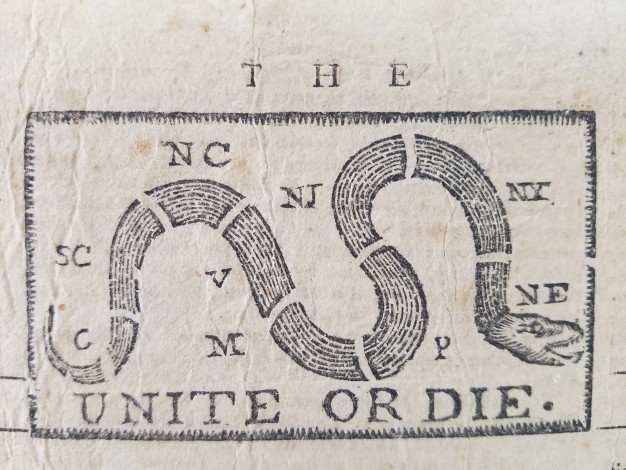
Benjamin Franklin was a leading sage of the 18th century. At a pivotal moment in 1754 the founding father famously created a simple, elegant political cartoon (pictured) imploring the 13 disparate British colonies to “join or die” in the first known graphical representation of a hypothetical New World colonial union, a precursor concept to America’s existence well before that became a thing. Franklin published multiple variations of Unite, or Die in the context of bitter disputes rendering the colonies apart and endangering their bid to form a security alliance, like a snake chopped to pieces, while the French and their native allies posed a growing security challenge that Franklin viewed as existential to the colonies. The French and Indian War was about to brew and there was no consensus about forming a unified defense pact against France. Some colonies projected their desire to stay out of the fight, which would have killed the novel idea of combining resources into a joint colonial movement in the cradle. Franklin believed that without the colonies joining forces, the French would be confident in picking off the English colonies separately. And so a newspaper cartoon created by a respected renaissance man delivered a stark message that succeeded in galvanizing the public, united the colonies against the French in the short run, which in turn helped them prevail together in a major war. That was just a dry run for what was to come. Some years later Franklin’s political cartoon also became a leading symbol of freedom and victory during the much larger American Revolutionary War itself. Unite, or Die is a rallying cry that has transcended time, positively impacting multiple wars fought decades apart during Franklin’s lifetime, and appropriately it’s also a visual message that desperately needs to be heeded in our own time.
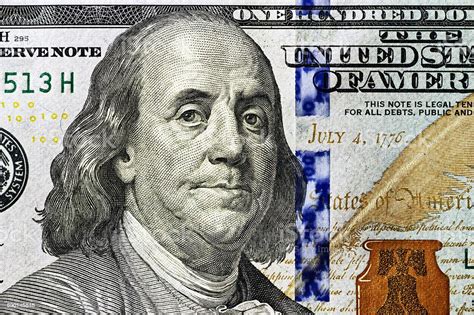
The ultimate success enjoyed by the American Revolutionaries should not overshadow the decades of courageous struggle that made winning possible. The entire time, deep philosophical disagreements ominously loomed between the colonists over what they hoped to build. Franklin was not exaggerating with his advertising campaign. The far-flung colonies’ many differences threatened to eclipse their common interests and derail the agenda of moving together in coordination. If the colonists’ deep rifts endured instead of being patched, both the French and later the British might have executed a divide and conquer strategy to dominate a bickering and fracturing alliance, changing the course of history.
When Franklin published his political cartoon the glorious experiment that came to be known as the United States of America was still far away. He demanded people to risk everything without knowing how things would end, which is how visionary leaders operate. But a foundation was laid because the colonies did heed Benjamin Franklin’s call, and by sustaining the alliance through ups and downs, including the bleakest days of suffering under the boot of the world’s most powerful global empire, the colonies never did break from each other. That unity eventually manifested into superpower, and still stands today in the form of the modern USA.
Even 250 years later there’s still no guarantee that America will always outlast its future threats. There never will be. America was and still is an idea, and ideas get snuffed out all the time. History is a vast graveyard of good ideas and good intentions. It’s up to us as the latest standard-bearers to keep the torch lit on our watch, and hand it off to the next generation. Franklin and his fellow founding fathers recognized that passionate debate was healthy and even necessary, as long as the stakeholders remained united at the end of the day. His urgent call for unity is every bit as necessary now as it was then. Will we learn this lesson passed down from our forefathers in order to preserve what they started for us so painstakingly?
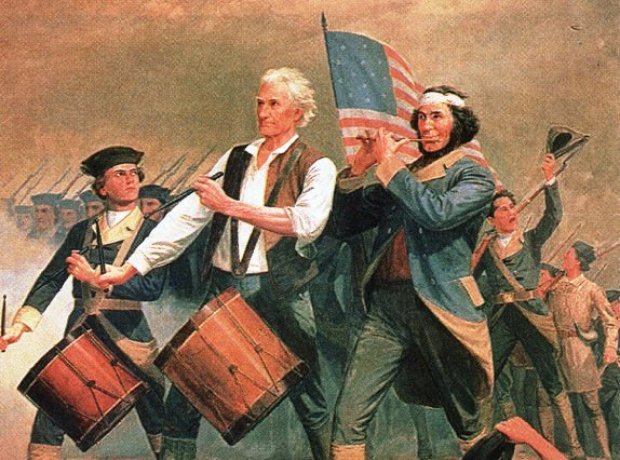
The Colossal Empire of Media & Social Media Profiting Off Our Demise
Hard to tell. Today America is increasingly defined by internal division, the fault lines juiced up by millions of devices plugged into a complex, confusing, and unwieldy web of information, misinformation, and disinformation powered by a colossal empire of uniquely American media and social media corporations ceaselessly squawking into the devices 24/7. These organizations are thriving in this era of cynicism, hate, anger, fear, and depression- and freely access those lizard-brain feelings they activate in all of us by relentlessly obscuring the boundaries between news and entertainment, facts and fake news. The confederate media empire continues learning and adapting, getting better and more creative at perpetuating its reach with encampment inside the homo sapiens brain harnessing sophisticated cutting-edge technology. None of this occurred by accident. Quite the opposite, this was intentional. The Hellscape artists posing as news professionals purposefully operate in a cold, data-driven, and algorithmic way to methodically maximize profit. The nefarious ways in which Americans produce and consume news is tearing apart fellow citizens, neighbors, even friends and families at the root level by embedding malicious programming software deep in our brains. Over time different individuals are implanted with dramatically alternate realities, heavily personalized based on intrusive legalized spying on behavior patterns. We are all supposed to be watching the same movie in real life, and yet we are instructed in customized fashion what to think and believe by our own bespoke feed. The Hellscape profiteer’s end goal is to cleverly manipulate current events so as to weaponize it; to artificially manufacture and then perpetuate harmful divides between groups of Americans as our collective mental hardware is perhaps permanently altered by fear and vituperation toward the other. None of this is in our individual interest, none of this is good for the country, and certainly none of us consented to this process, even those 0.0001% of us who actually read through the fine print before signing off on the privacy policies. Now it’s too late: once duly programmed, people find it hard to quit sucking at the teat of their squawking device for always-reliable dopamine hits, and the periodic release of bile toward a perceived opponent in the ether. It’s a giant virtual casino, and just like the ones in Vegas open for play 24/7, the game never stops and the House always wins.
A Cruel Mockery of Public Service
So now our collective psyche is thoroughly damaged by a highly organized campaign that corroded our mental health at widespread scale and wholesale rates of addiction. We barely understand the societal consequences yet. The youngest among us are cleverly being held captive from a disturbingly early stage in life, and remain so possibly forever. With this backdrop it should surprise no one that some of the worst human beings to ever walk amongst us are rising to the very top ranks of power in our deeply flawed political system and its closely aligned corporate greed machine. These leaders of government and industry alike feast on the dysfunction of a body politic hurtling toward a nervous breakdown. Their persistent agenda to divide Americans instead of uniting us is a feature, not a bug of our politics despite the obvious harm to the public good. Loud echo chambers have risen along tribal formulations such as geography, political party, race, religion, gender, and income brackets. Left to right, these clubhouses are animated by hormone and emotion instead of analysis and logic, with feeling good taking priority above productivity in the discourse. Seeds of mistrust have been planted throughout the land, predictably resulting in hateful rhetoric too often bordering on violence sprouting up nationwide.
Take your pick of an echo chamber clubhouse on one side or the other to enter the fray for reliably comforting divisiveness and acrimony: Left vs. Right, city vs. rural, red state vs. blue state, Republican vs Democrat, Black Lives Matter vs. Proud Boy, local vs. immigrant, pro-life vs. pro-choice, “Woke” vs. “MAGA,” Christian vs. Muslim. Inexplicably any political argument could abruptly turn disrespectful or even existential in nature and the other side is always at fault, willfully ignoring the tragic irony that divisiveness itself is the larger existential threat. Many debates descend into hysteria and ad hominem attacks, decoupled from logic. The other side on an issue can become the traitor, the enemy, inhuman, or deserving to die despite being a fellow American who cares about the nation’s affairs just like you do. We have configured endless ways to separate ourselves using twisted mental constructs, and engage in emotionally charged argument with each other, with no interest in being open-minded, empathetic, or learning new things. We come to the debate having already decided who or what’s right. Facts that are inconvenient to the preconceived notions are dismissed as fake, an easy out in modern debate. These conflicts burn on low heat without end in sight, because special interests have a stake in our society being perpetually in flames rather than dousing the fire for everyone’s safety and sanity. The overarching goal has become to dominate, or “own” the opposition rather than dialogue, compromise, understanding, and getting things done for the country.
Solutions?
After breaking down the state of affairs like this, it might seem like we are close to a civil war. Thankfully, we are not. The most acute geographic divide in American politics is deep blue urban vs. deep red rural, which does not lend to geographic contiguity among like-minded people, or the ability to easily coordinate effective policy- or armed maneuvers- beyond the local level. Still, we do not need to be embroiled in a real civil war in order to be defeated.
We are entering a highly dangerous period for the United States on the global stage due to several intense wars raging that are at risk of spreading. This potential for contagion could easily drag the United States unwillingly back into war, while already we (and many others) are heavily involved in both the Ukraine and Israel wars by proxy. It’s a good thing we’ve managed to limit the involvement of US troops in the hostilities, but we are not very far from having to call up boots on the ground in both cases. Meanwhile the United States has committed to using force to defend Taiwan if China launches an invasion on the island, and this scenario is not far-fetched. That adds up to possibly being pulled into three major theaters of war simultaneously, something that we must avoid at all costs as a spectacular amount of American blood and treasure would be at stake. But external forces have their own ideas on how to play the game. The global descent into major conflict in 2022 and 2023 is in fact a function of America’s internal dysfunction, which the rest of the world is following closely. The United States is perceived as weaker than before, which has no doubt helped convince Russia, Hamas, and Israel alike to conduct major military actions without sufficient concern for how the United States would respond. This is partly due to the long, expensive, and failed War on Terror.
We can still fix this. America has emerged after facing existential threats before. The good news is that the solution is exceedingly simple. Just listen to Benjamin Franklin. Unite, or Die. Americans need to project a unified front to one other first, and to the rest of the world next in order to prevent foreign actors from taking advantage of us. We need a functional government where Democrats and Republicans negotiate and compromise into cooperation with wide open lines of communication, especially in Congress which appears to be falling apart and has seemingly given up on discipline, innovation, budget controls, or generally getting things done to advance an America facing stiff competition. There is too much reflexive opposition based entirely on party ideology. All Americans need to spend more time contemplating what ties us together instead of dwelling on ways to divide ourselves. We need to vote in leaders who will aggressively do the same. We need to show more gratitude for the history of the United States and the gifts of being American that are by no means universal, rather than focusing on all of the things going wrong in the country and finding someone else to scapegoat for it. Regardless of our political beliefs, we should be willing to admit that’s not how this works.
I will admit to being guilty of this too, of viewing political opponents as the enemy. Of feeling pure disgust near groups of rally goers wearing red MAGA hats. I simply cannot understand these people, and I’ve tried in earnest for years. In particular I was extremely angered by anyone having different views from mine after January 6th, which I considered a terrorist attack by seditious traitors. But that’s in the past, and maybe I need to work on not getting so worked up by developments. For my own health and mental health I am trying to let little things go that happen in the day to day world of politics, no matter how ridiculous or enraging. We do not need to fully comprehend those we disagree with in order to work together on common interests like national security. It might wound our pride, but all who care about America’s survival will need to forgive and forget the vicious events, quotes, wounds, and slights of the past in order to move on and collectively address the burgeoning new challenges ahead of us. If we are incapable of this, if we do not become dramatically more united internally than we currently are, the odds of us losing America as we know it are just very high. Everyone loses. What would be the point of continuing to treat one another the same way we have been, if losing our country for all is the inevitable outcome that benefits absolutely none among us?
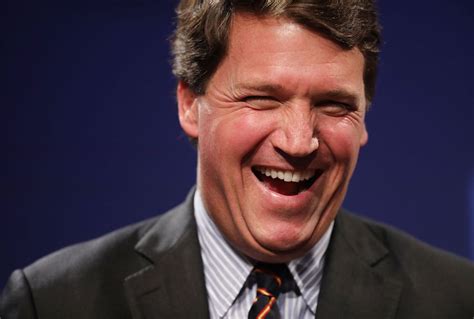
For my part: I am going to spend this next fraught election year in the United States trying like Hell to understand those fellow Americans who have opinions and views very different from mine, even if my attempts to date have not worked in this regard. I am a moderate centrist, and obviously much of this country is not. I am going to try to have an open mind, to view them as humans, who might be patriotic like me, who might have stuff in common with me and my family and friends. Who care about America’s survival like I do. I am going to try and get out of the bubble, and break the algorithms of my Internet life. I plan to set aside a significant amount of time listen to and watch Tucker Carlson for example, a figure I have long loathed. And some of my friends and family who are further to the right than me, and further left as well. To understand. To learn. To synthesize. And maybe, just maybe, to figure out how we can build bridges rather than walls between us.
This is probably what Benjamin Franklin would advise me to do if we were discussing America’s current challenges over a beer.
 MAHANTH.ORG: ANCIENTIC FUTURIST
Another well-written article Mahanth! Definitely would love to have you join the Voters First, WI marketing & messaging team if you agree with our proposed solutions to help unite our country! We are getting close to public hearings on Final Five Voting, which could help significantly improve the way we elect politicians and transfer power from the two parties back to the electorate!
LikeLiked by 1 person