Mahanth S. Joishy is Editor of usindiamonitor
2023 is the year where India officially overtook China to claim the long-prophesied prize of world’s largest population, a dubious tribute to the reproductive prowess and virility of Indians, and a newfound demographic status that will last indefinitely. Certainly well past the rest of our lifetimes. Appropriately, Prime Minister Narendra Modi chose to spend part of this blazing-hot summer leading important foreign delegations on behalf of a growing, rising nation that might be the world’s leading marketplace of goods, services, consumerism, culture, and ideas for the foreseeable future. India’s seat at the table has just gotten a little bit bigger.
These formal trips kicked off with an official state visit to Washington, DC full of pomp and circumstance. Modi was greeted by large audiences like a rock star on previous visits to U.S. soil, and despite his limited English skills he always managed to put on a charm offensive: the seminal, sizzling speech at Madison Square Garden in 2014; a brilliant cameo visit on that same trip to the Global Citizens Festival in Central Park where he channeled the Jedis, no less; the rousing address to a joint session of U.S. Congress at the invitation of Speaker of the House Paul Ryan in 2016; and to date perhaps the capstone of them all, the raucous Howdy Modi event for a jam-packed Houston NRG Stadium in 2019. I personally attended the events at Madison Square Garden at at the US Congress, where I was able to shake Modi’s hand for a brief second as Paul Ryan escorted him out of the assembly. All of these showcased Modi’s powerful charisma on massive foreign stages.
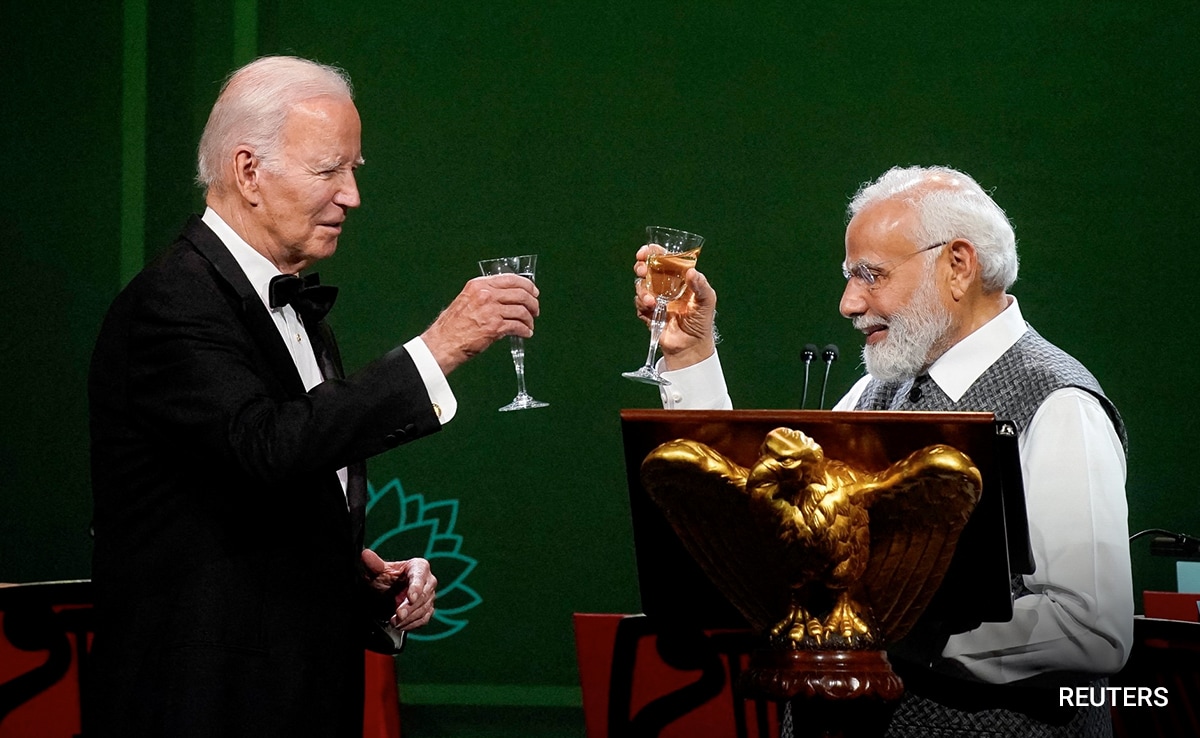
But this time was different, as the Biden-Modi bonhomie was taken up another notch. Till 2023 no United States presidential administration had invited Modi to a formal state visit and dinner to Washington DC, as we witnessed this summer, paired with a second address to a joint session of Congress at the invitation of Speaker McCarthy, and packed with numerous other events around the visit. Music, speeches, color guards, packed houses, food, and booze aplenty turned the mood celebratory. He met a handful of US business leaders in America as well, including a consequential 1-1 sit-down with the one and only Elon Musk, which we suspect will pay dividends especially when it comes to the rapidly expanding footprints of both Tesla “as soon as humanly possible” and SpaceX in an India that appears more and more open for business than at any point in its history.

The most memorable line of this Washington trip didn’t involve Star Wars vocabulary, but featured a very clever play on artificial intelligence (AI); during the address to US Congress, where the adulatory Indian-American cheering from the rafters boomed throughout his appearance, Modi coined an alternative vision for AI: the America-India partnership.
Soon on the heels of the Washington jaunt, Mr. Modi went on to be greeted warmly by President Macron in France and the sheikhs of the United Arab Emirates for further bilateral business. Now that this whirlwind flex of the Indian leader’s diplomatic muscle is complete, it is worth analyzing what concrete accomplishments really came out of this summer’s trips beyond the nice words, the loud cheers, and the toast of non-alcoholic beverages with Biden.
(1) The United States
Obama welcomed Prime Minister Manmohan Singh for the very first state visit of his administration. This invitation by President Biden was long overdue. But what really came out of the affair when it comes to the foreign policy of both nations? As always, not enough in my opinion, as in my biased view the US-India bilateral relationship is one of the most important in the world, especially because it is less contentious than the more critical US-China head-bumping we witness in 2023 that has long been brewing toward an ugly standoff.
Speaking of China, India and the United States will need each other to balance against the aggressive dragon for decades to come. While China came up in conversation often, it was spoken of largely without mentioning its name directly. This vague tip-toeing will neither deter China nor will it serve to please the Chinese leadership, who were no doubt observing every minute of Modi’s Washington trip like hawks. China, in close partnership with Pakistan, presents the foremost military threat matrix to India’s peaceful rise now and well into the future. It’s long been our view that India does not stand a chance without closer military ties to the United States, as India’s outsized historical reliance on cheaper but inferior Russian arms continues to leave the world’s largest population vulnerable to security threats from its hostile neighbors.
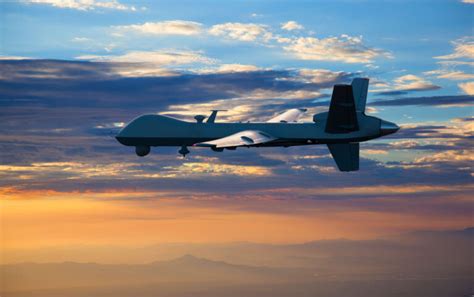
Necessary but inadequate delegation talks were held at the intersection of the economic and the military in Washington. The United States has shown itself eager to fill several voids in India’s underdeveloped military arsenal. India has some tough decisions to make, especially when it comes to its non-alignment desires and its capacity to buy better but more expensive armed forces kit. For example, India has never purchased large armed US drones to date, but General Atomics products seem now to be on the table to help out in patrolling the vast Indian Ocean and borderlands. This seems logical and both sides should expedite this sale. Also discussed were jointly producing F414 jet engines on Indian soil in a new partnership between GE and Hindustan Aeronautics, another no-brainer. Finally, a deal is underway to work on the all-important chip design and production that now touch all aspects of the economy and national security. We desperately need to see these and a plethora of other military-economic deals inked as soon as possible between the two democracies to help maintain the rules-based world order that both nations purport to believe in. This won’t be possible otherwise, and a ramp-up is needed beyond the basic logistics sharing and joint naval exercises like Malabar that are already taking place by the participating Quad nations of USA, Australia, Japan, and India. Finally, we would love to see the United States and India move beyond joint exercises and trade deals, into the realm of join patrols in the Indo-Pacific theater. This would be a powerful message of deterrence the entire world would take notice of.
Perhaps more imminent is the arrival of Tesla’s manufacturing to India’s shores, which has been under discussion for too many years now, as I wrote about back in 2020. India and the United States are both baking in the heat this summer thanks to climate change, and so is just about every other corner of the globe. People, animal, and crops are being annihilated by the weather at an alarming clip. India is far behind when it comes to sustainable transportation, including the electric vehicle (EV) revolution taking place. Elon’s Tesla is just the right company to help turbocharge Indian battery and solar manufacturing, hopefully both, to a level where India can help make a dent in the problem on behalf of itself and the wider planet. It’s time for India to cut the red tape and save itself while it still can. Many other US companies can help in this area, while creating good jobs on both sides as well.
Finally, when the talks came to the Ukraine War, not much of note took place. India reiterated its neutral stance and desire to see a peaceful end to the conflict, while staying in Russia’s good graces and a stable destination for Russia’s battered fossil fuel spigots. I don’t think the United States will be able to get India to choose sides for the duration of the war. To be fair, India is not yet in great position to do so as it heavily depends on the purchase and maintenance of Russian arms and energy. The two sides will need to agree to disagree on Ukraine, with morals in this area set aside. As time goes on, however, India will find out that a Russian state destabilized by this bloody war will not be able to supply the weapons India will need to replenish its own stocks even in peacetime, let alone if India is dragged into war and expends munitions.
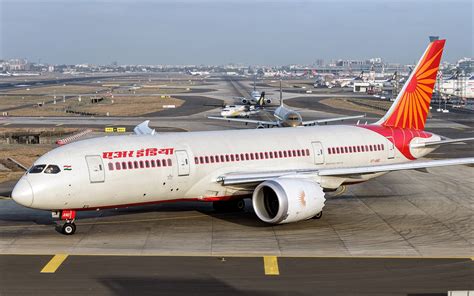
India’s population boom shows that the United States and the world need India to succeed, just as much as India needs them. But success is not guaranteed, in either the battles for climate change or security. As India bakes under the burden of the nation most likely to be negatively impacted by climate change due to its geography, one version of climate Hellscape awaits the Indian people, of particular concern being insurmountable water shortages in the coming years without better infrastructure. On the other hand we are seeing glimpses of what the positive future could look like if India continues to rise peacefully. One example is Air India’s historically largest-ever commercial airliner order for nearly 500 Boeing and Airbus planes initiated in 2022, a mammoth procurement that will feed many American and European mouths for years if executed to fruition.
What we did not find during Modi’s US trip this summer is enough momentum and acceleration on these matters as both nations are bogged down by a shocking lack of urgency, momentum, or acceleration as demanded by our times. The obvious goals should be the two locking arms in a steadfast military alliance and free-trade agreement, sadly neither of which appear to be on the horizon for structural reasons. Concrete achievements from the trip remain limited and insufficient. Such is the story of the “AI” partnership till now, though it doesn’t necessarily need to be its fate. For that: visionaries wanted.
(2) Modi Represents Inde in Paris
In July, PM Modi was guest of honor at PM Macron’s invitation at Bastille Day, which is a big deal. The red carpet Paris laid out matched or exceeded the one in Washington. We could argue that the French leg of the journey was more successful for Modi than the US one, considering that India’s relative position of power to France is defined by more equal footing on all measures, while the relationship to the United States is clearly of a much more junior partner. Indian troops marched down the Champs-Elysee, and Modi’s delegation enjoyed dinner at the Louvre.
The most concrete discussions in Paris centered on India’s purchase of French Rafale fighter jets, which the Indian Air Force is already familiar with, along with joint French/Spanish produced Scorpene submarines for the Indian Navy. After Macron was snubbed by Australia, the UK, and the United States by the AUKUS submarine deal last year, this was an important saving of French face. Indeed, Macron and Modi reiterated that defense ties are the pillar of the bilateral relationship.
India also wants to increase cooperation with France and other comers in space, after India successfully launched a vessel toward the far side of the moon in July. Modi & Macron also announced new initiatives to tie up on renewable energy, hydrogen projects, artificial intelligence and semiconductors. I suspect that cooperation with France on these issues seems more palatable to Indian leadership, because Macron more closely appreciates India’s non-alignment stance than the United States does, and the smaller France does not threaten controlling colonial ambition in the way that Americans are perceived to (incorrectly) by New Delhi.
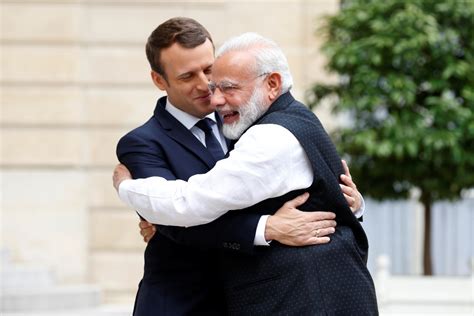
The last item of note from Modi’s two days in Paris is the same stance mirroring the US-India agreement to agree to disagree over the Ukraine War. Macron’s team was no doubt less pushy on the subject than their American counterparts, if I were to guess. France deeply relies on NATO partners, not India, for its security in the European continent. However, France’s goals for the Indo-Pacific, anchored by its significant island holdings in the Pacific Ocean, will rely on Indian partnership more especially in the naval realm, and in this there is alignment between both democracies and the United States as well vis-a-vis China’s continued rise.
France is an aging nation with serious economic hurdles to overcome to continue to be a respected player in the 21st century world. India is young, energetic, and growing as a market for French stuff. No doubt Macron and his successors will continue to look to India for partnership in this difficult period, though the partnership is nowhere near as consequential as some of India’s (or France’s for that matter) other ones.
(3) Modi Sheikhs Things Up
If Modi came to Washington as a junior partner, and arrived in Paris as an equal, the United Arab Emirates trip was a different story altogether. There are 3.8 million Indian citizens living in the UAE, far outnumbering the number of Emiratis, forming an outsized bulk of the UAE workforce professionals from medical and engineering, to construction labor and taxi drivers. India is clearly the senior partner in the bilateral relationship with the tiny desert country UAE, but the two nations are tied to one another by desperate need. The UAE badly needs Indian labor, while India derives massive benefit from the remittances those workers send back to India which boosts the Indian economy greatly, especially along the West coast.
Our biggest disappointment in this relationship is how terribly Indian (and other) migrant workers are treated in the sweltering hot workplaces, such as construction sites, where Indians literally die on a regular basis from horrible working conditions as I witnessed with my own eyes during my own fantastic Emirates trip last year. During the one-day visit to Abu Dhabi after Paris, of course this concern was not publicly discussed though we should wish it was. To be fair Modi must walk a fine line here. Cheap labor is plentiful and the Emiratis could just as easily import migrant workers from elsewhere to run their oil refineries, hotel kitchens, and construction sites, thereby cutting off billions of dollars in annual remittances across the Gulf to India. Plenty of labor already pours in from Pakistan, Bangladesh, Sri Lanka, and the Philippines anyway and the supply is pretty much unlimited from these places with far less available jobs. Yet I believe this is an area where Modi must make a principled stand at some point to protect his own people- really, our people if you happen to be a member of the global Indian diaspora.
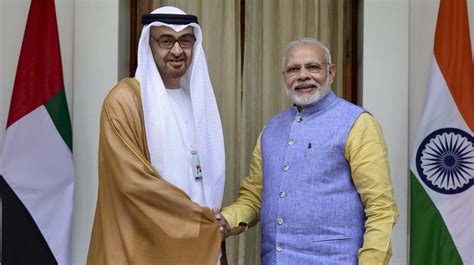
Instead the talks in Abu Dhabi with President/Sheikh Mohamed bin Zayed Al Nahyan focused on applaudable initiatives around trade, education, and interlinking local currency payment systems to help grease those remittances to India and back. Modi enjoyed a rock star welcome in Abu Dhabi too from the Indian and especially Hindu diaspora as he always does, and received the Zayed Medal, the UAE’s highest civilian honor, from Al Nahyan.
In conclusion, Modi’s ambitious travels in summer 2023 are at least approaching being fitting for a rising India on population and other metrics, and nearly befitting for the leader of the country hosting the next G20 Summit this fall in New Delhi. It was an overall successful charm offensive on India’s behalf; but categorically, we would have liked to have seen more ambition, not less, when it comes to concrete steps around climate change, security agreements, or advocating for Ukraine and Indian laborers. On the other hand, I cannot think of a previous summer of foreign delegations by any Indian prime minister that matched the scope of this one. India is slowly headed in the right direction. Modi should be in power for a while as I see no worthy opposition leadership anywhere on the horizon, despite ripe opportunity for some. This is relevant, because Modi still has a long way to go.
 MAHANTH.ORG: ANCIENTIC FUTURIST